

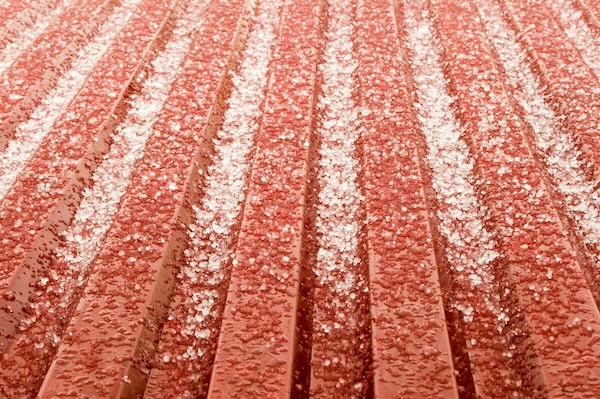
If you live in Louisiana, Mississippi, or anywhere along the Gulf Coast, you know that severe weather is a part of life in this region. From spring thunderstorms to late-summer squalls, hail can strike without much warning. If you’re considering a metal roof—or already have one—you’ve probably wondered: can hail damage a metal roof?
The short answer is that metal roofs are among the most hail-resistant roofing options available, but they’re not completely indestructible. Here’s what you need to know about how metal roofs perform in hail—and why they remain one of the best choices for weather protection.
Measuring Impact Resistance in the Roofing Industry
Metal roofs earn some of the highest ratings for impact resistance in the roofing industry. The Underwriters Laboratory (UL) created a national standard for testing roof impact resistance called UL 2218. During this test, a two-inch diameter steel ball is dropped from approximately two stories onto the roofing material to simulate the impact of large hailstones traveling at high speeds.
Roofing materials receive a rating from Class 1 (least resistant) to Class 4 (most resistant). Metal roofing consistently earns the Class 4 rating, which is the highest rating available. This rating gives insurance companies enough confidence that many offer premium discounts to homeowners who install Class 4-rated metal roofs.
Unlike asphalt shingles, which can crack, lose granules, or become brittle over time, metal maintains its strength and impact resistance throughout its lifespan. A metal roof that’s 20 years old will resist hail just as well as the day it was installed—something you can’t say about most other roofing materials.
Can Hail Damage a Metal Roof? Here’s What Happens When a Storm Hits
When hail does make contact with a metal roof, you’ll typically see one of two outcomes: denting or puncturing. The good news is that punctures are extremely rare, especially with thicker gauge metal.
Denting is primarily a cosmetic issue. If your metal roof gets dented from hail, it may affect the appearance, but the roof will continue to function properly. These dents won’t cause leaks or compromise the structural integrity of your roofing system.
Puncturing would be a more serious problem that could lead to leaks, but this almost never happens with quality metal roofing. It would take exceptionally large hail—the kind that makes the evening news—combined with other factors to puncture a properly installed metal roof.
Can hail damage a metal roof? It depends on several interconnected factors and roofing options that influence how your metal roof responds to hail:
- Metal thickness: The gauge of your metal matters. Lower gauge numbers mean thicker metal. A 22 or 24-gauge roof will resist damage better than a 29-gauge system.
- Panel design: Roofs with ribs, striations, or textured surfaces deflect hail impact better than completely flat panels.
- Roof pitch: Steeper roofs tend to deflect hail better than flatter ones.
- Underlayment and installation: A properly installed roof with quality underlayment provides better protection overall, especially if a metal roof has been retrofitted atop old shingles.
- Material Quality: American-made roofing materials are high-quality, durable, and offer unbeatable quality and longevity to any structure.
Hail Resistance: Metal Roofs vs. Other Roofing Materials
When you compare how different roofing materials perform in hailstorms, metal comes out ahead in several ways, working to protect all your agricultural, commercial, and residential assets.
Asphalt shingles commonly lose their protective granules when hail strikes. Over time, this granule loss exposes the asphalt layer underneath to sun damage and accelerates deterioration. Shingles can also crack, split, or tear completely in severe hail events. Because shingles become more brittle with age, an older shingle roof is even more vulnerable to hail damage.
Wood shingles and shakes can crack and splinter when hit by hail. They may also develop isolated patches of damage that lead to water infiltration. Tile roofs, while durable in many ways, can crack or break under hail impact. Replacing individual tiles can be expensive and time-consuming.
Metal maintains its protective qualities year after year. Roofing contractors consistently report that after major hail events, metal roofs need far fewer replacements than shingle, wood, or tile roofs in the same area.
What to Do After a Hailstorm
Even though metal roofs hold up well against hail, it’s smart to inspect your roof after any significant storm. Start by looking at ground-level indicators that might suggest roof damage:
- Check for dents on your car, outdoor furniture, or air conditioning units
- Look at window screens for tears
- Examine vinyl siding or fencing for cracks or holes
- Inspect outdoor light fixtures for damage
If you see damage to these items, your roof may have taken some hits too. While you can sometimes spot dents from the ground, a professional inspection gives you a complete picture.
If you do find damage, document it with photos and contact your insurance company. Many homeowners discover that their insurance covers hail damage repairs, especially if the damage affects the roof’s function rather than just its appearance.
Understanding Cosmetic vs. Functional Hail Damage on a Metal Roof
Insurance policies often distinguish between cosmetic damage and functional damage. Cosmetic damage refers to dents or dings that affect appearance but don’t compromise the roof’s ability to protect your home. Functional damage means the roof’s performance has been affected—such as through punctures, seam separation, or fastener problems that could lead to leaks.
Some insurance policies offer a cosmetic damage exclusion, which means they won’t cover dents that don’t affect performance. Before signing any waiver, consider your situation. If you live in an area prone to hail, if your roof has flat or smooth panels that show dents easily, or if you want your roof to maintain its like-new appearance, you may want full spectrum coverage on your building’s metal roof.
Protect Your Property with Metal Roofing From ADCO Metals
So, when an unexpected weather event strikes, can hail damage a metal roof? Despite the possibility of cosmetic denting in extreme conditions, metal roofing offers superior protection that other materials simply can’t match. The combination of Class 4 impact resistance, decades-long durability, and consistent performance over time makes metal an excellent choice for anyone concerned about hail in the coming season.
At ADCO Metals, we’ve been serving the Gulf South for nearly six decades. We carry only prime-quality, American-made metal roofing materials, and every product comes with a warranty for your peace of mind. Whether you need standing seam, 5-V Crimp, or PBR panel corrugated metal, our team can cut materials to your exact specifications and help you find the right solution for your project.
Metal roofs also bring additional benefits beyond hail resistance. They reflect heat to reduce energy costs, contain recycled materials for environmental responsibility, and can last five, even six decades, with proper care.
Ready to see what metal roofing can do for your home, barn, or commercial building? Contact ADCO Metals today for a free estimate. With locations in Lacombe, Hattiesburg, Picayune, and Walker, we’re here to serve you year-round, rain, hail or shine.
